
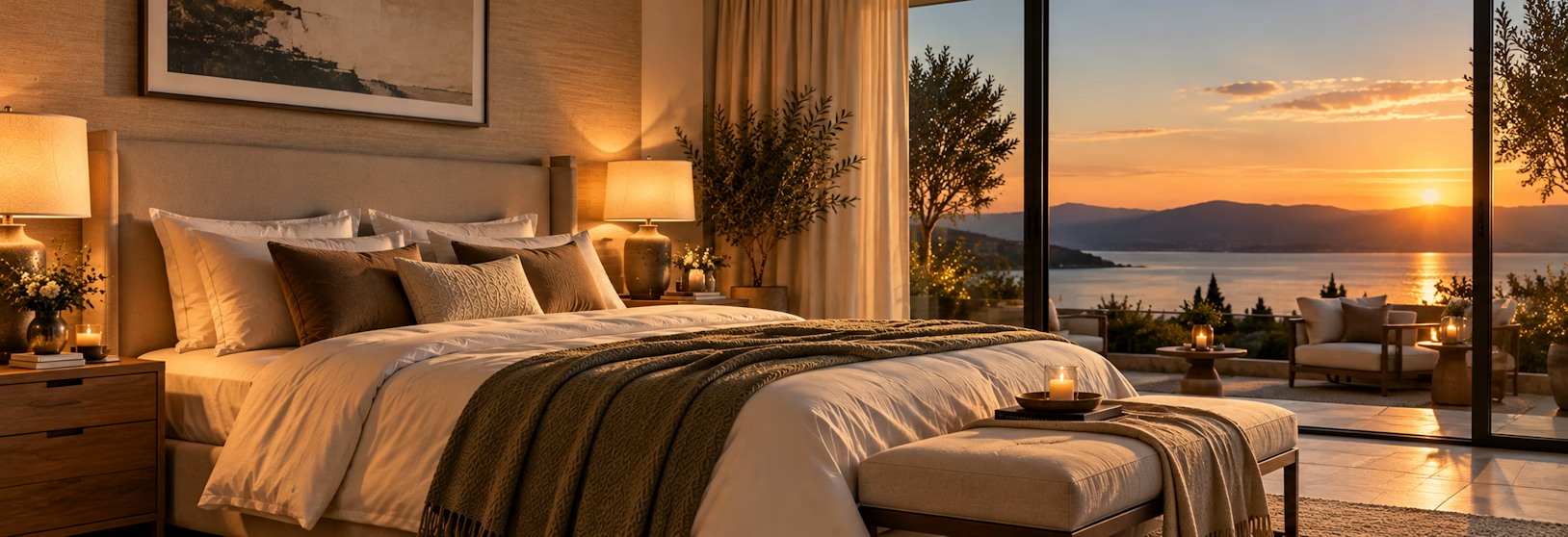
You can usually tell when a bedroom has been decorated for a photograph.
Everything is in its place. The pillows are perfectly arranged. Nothing is sitting on the nightstand except perhaps a small vase and a carefully chosen book. The bed looks untouched.
It can be beautiful. It just doesn't always feel like somewhere you'd want to spend an evening.
A romantic bedroom is usually a little different. It feels comfortable before it feels impressive. There is a good chance the sheets aren't perfectly smooth by bedtime. Someone has left a book open. There might be a glass of water on one side of the bed and a pair of glasses on the other.
The room feels lived in.
And that has more to do with romance than most of the things people buy for it.
Start With the Bed
The bed is going to be the largest thing in the room, so it makes sense to get this part right.
Not necessarily the most expensive bed. The right one.
A mattress that both people actually like. Sheets that feel good when you climb into them. Pillows that aren't there purely because they look good against the headboard.
Linen is lovely when you want something relaxed and slightly rumpled. Crisp cotton has a different appeal. In winter, a heavier blanket can make the whole room feel warmer before you've even got underneath it.
And there is no real need for twelve cushions.
If they have to be thrown onto the floor every night, they have stopped being useful.
Turn Off the Big Light
This is one of those small changes that makes a surprisingly large difference.
The bright light in the middle of the ceiling is useful when you're cleaning the room or looking for something you've dropped. At night, it tends to make everything feel a little too exposed.
Bedside lamps are better.
A lamp on a dresser or in a reading corner helps too. You want the light to come from a few places rather than one bright source above your head.
If there is a window with a nice view, leave the curtains open for a while. The lights outside, the trees, the sky after sunset, whatever happens to be there, can become part of the room.
There is no reason to rush to close everything off.
Keep Work Out of the Bedroom
This is easier said than done for people who work long hours.
A phone beside the pillow. A laptop on the bench. A jacket waiting for tomorrow's meeting. A reminder about an early flight.
None of it looks particularly serious.
But put enough of those things in one room and the bedroom starts feeling like another part of the working day.
If you can, give work another place to live.
Leave the laptop downstairs. Put the phone on a dresser. Hang tomorrow's clothes somewhere else.
The point isn't to create some perfectly disciplined lifestyle. It's simply nice to walk into a bedroom and not immediately remember what needs doing tomorrow.
Don't Make Everything Look New
Some of the nicest bedrooms I've seen have things in them that clearly weren't bought together.
An old wooden chest beside a modern bed. A chair that has been in the family for years. A photograph from a trip. A painting that one person liked and the other eventually came around to.
Those details matter.
When every piece of furniture looks as though it came from the same showroom, a room can lose some of its personality.
A little wear isn't a problem either. A blanket that has softened over the years. A book with a bent cover. A rug that has changed color slightly where people actually walk.
A bedroom should show some evidence that people live there.
Be Careful With Fragrance
Scent is one of those things where less usually works.
A bedroom shouldn't smell like perfume the moment you open the door.
Cedar, sandalwood, lavender, neroli, fig. Something light. Or nothing at all except freshly washed sheets.
Flowers are another easy option. A few stems in a small vase can be enough. They don't have to arrive in a huge arrangement wrapped in cellophane.
Sometimes the nicest thing is simply coming home, opening the bedroom door and smelling clean linen.
Give the Phone a Night Off
Phones have become so ordinary that it's easy to forget how much attention they take.
Someone checks a message.
Then another one arrives.
Then there is an email. A news story. A photograph someone posted. A work question that could easily wait until morning but somehow doesn't.
And suddenly two people who were talking are both looking at screens.
Try putting the phones somewhere neither person can reach without getting up.
It sounds slightly ridiculous when you say it out loud.
It works.
Let the Room Have Some Personality
There should be things in a bedroom that mean something to the people sleeping there.
Maybe it's a photograph from a trip neither of you has forgotten. Maybe it's a book one person keeps rereading. Maybe there is a piece of furniture that came from a parent's house.
It doesn't have to be expensive.
In fact, the things with the most sentimental value often aren't.
A bedroom becomes more interesting when you can tell that someone has lived a life before they arrived there.
Don't Try Too Hard to Make It Romantic
This is probably where most people go wrong.
Romance is not a decorating theme.
You don't need red everywhere. You don't need rose petals scattered across the bed. You don't need candles burning on every available surface.
Those things can be lovely on the right night. They just aren't what makes a bedroom feel intimate every day.
Sometimes it is much simpler.
Fresh sheets after a long trip. Music playing quietly while dinner is being cleared away. A window opens on a cool evening. Two people talking long after they should have gone to sleep.
Nothing particularly spectacular has happened.
That is often the point.
Make It a Place You Want to Stay
A good bedroom gives you a reason to slow down.
The bed is comfortable. The lighting is low. The room isn't crowded with things that need attention. The phone isn't within arm's reach. There is a photograph, a book, a familiar chair, something that belongs there.
It feels private.
For couples with busy lives, that privacy can be more valuable than another beautifully decorated room in the house.
The most romantic bedrooms don't necessarily look romantic.
They feel like they belong to two people who are happy to close the door, forget about the rest of the world for a while, and stay there.



Servicing Areas
Frequently Asked Questions
Start with comfortable bedding, soft lighting, and a room that feels calm rather than overly decorated. Personal touches, such as photographs, favorite books, or meaningful objects, can make the space feel more intimate.
Avoid filling the room with decorative items that interfere with comfort. Too many cushions, strong fragrances, excessive clutter, and work equipment can make the bedroom feel less relaxing. A romantic bedroom should feel natural and comfortable for both people.
You don't need expensive furniture or elaborate decorations. Fresh sheets, bedside lamps, a tidy nightstand, and a few personal details can make a noticeable difference without requiring a complete redesign.
Keep phones away from the bed, choose bedding you both enjoy, and make space for small shared routines, such as reading together or talking before sleep. A comfortable, private bedroom can encourage couples to spend time together without everyday distractions.
Warm neutrals, soft beige, muted greens, dusty rose, and deeper earthy tones can create a relaxed atmosphere. The best choice depends on the room's natural light and the colors you already enjoy living with.
Yes. Bedside lamps and warm, low-level lighting generally create a softer atmosphere than a single bright ceiling light. Dimmable bulbs are particularly useful because they let you adjust the room to suit different times of day.
Not at all. While we have strong presences in hubs like London, Sydney, and New York, our network is truly global. We work with high-net-worth individuals and executives who often split their time between multiple continents. We meet you where you are.
Absolutely. Every member, regardless of location, undergoes our signature multi-step screening process. This includes identity verification, background checks, and deep-dive interviews to ensure they meet our standards for ambition, character, and lifestyle.
There’s no single mold. We meet CEOs who live on planes, founders who built their own world from scratch, UHNW Singles who want someone who understands the pace they keep, and individuals from real estate, finance, law, medicine, entertainment and the list is long. What ties them together isn’t status. It’s a preference. They want thoughtful introductions, handled quietly, with people who genuinely fit.